 Lietuviškai
 Path separation edging
Submit an inquiry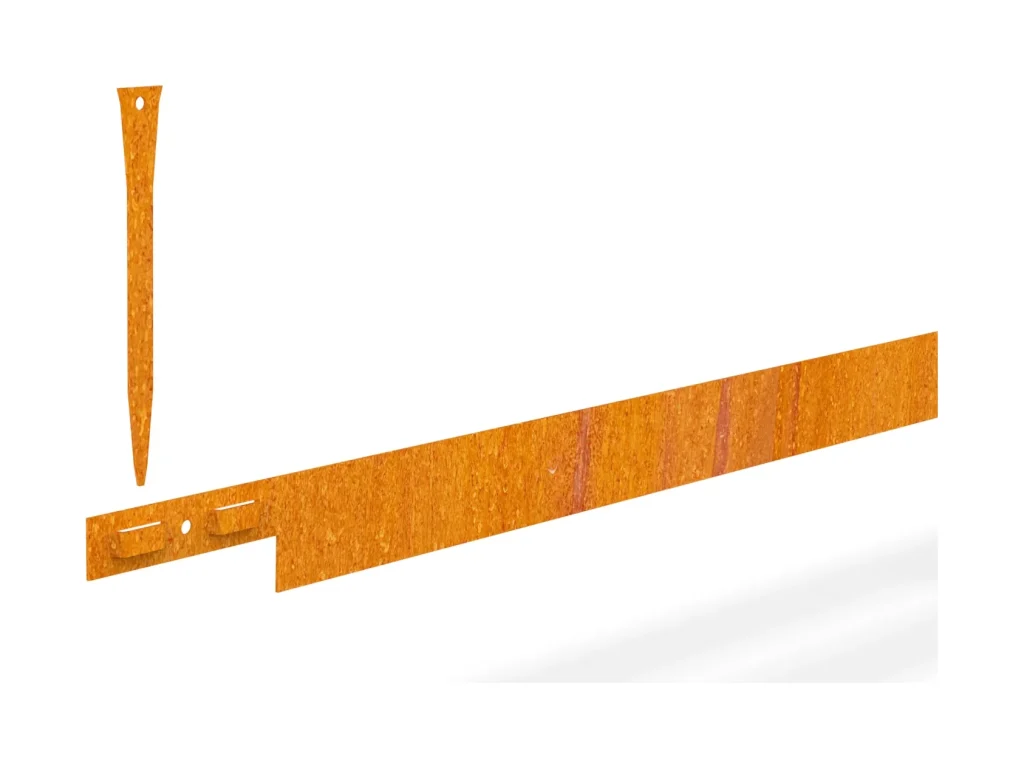
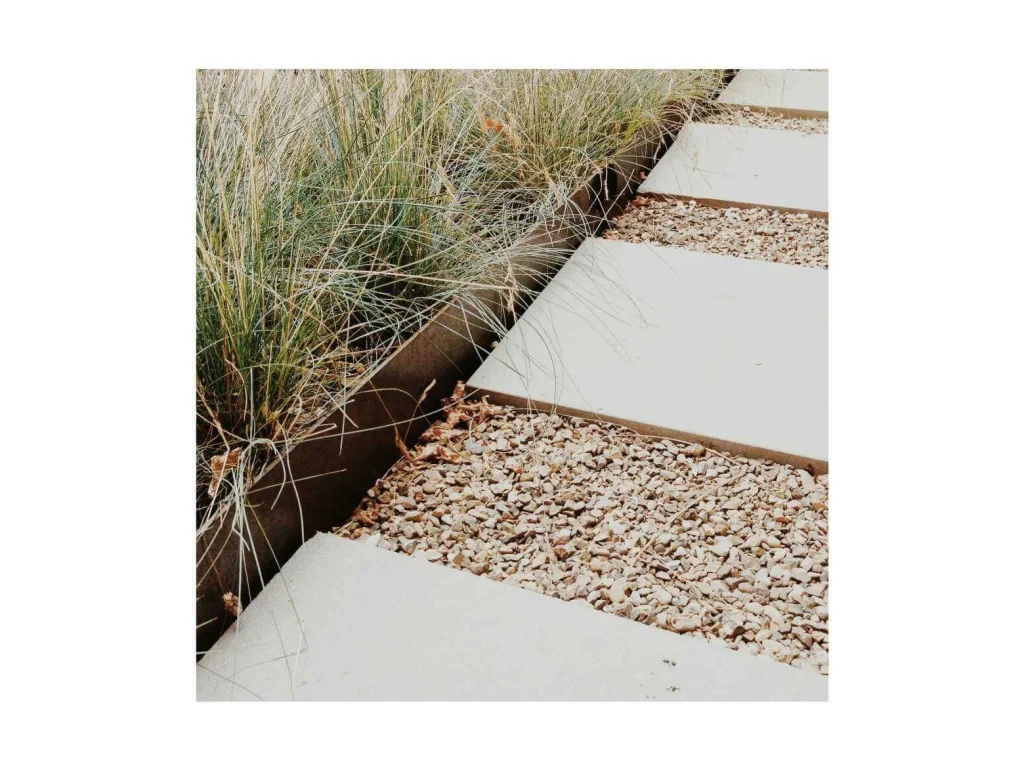
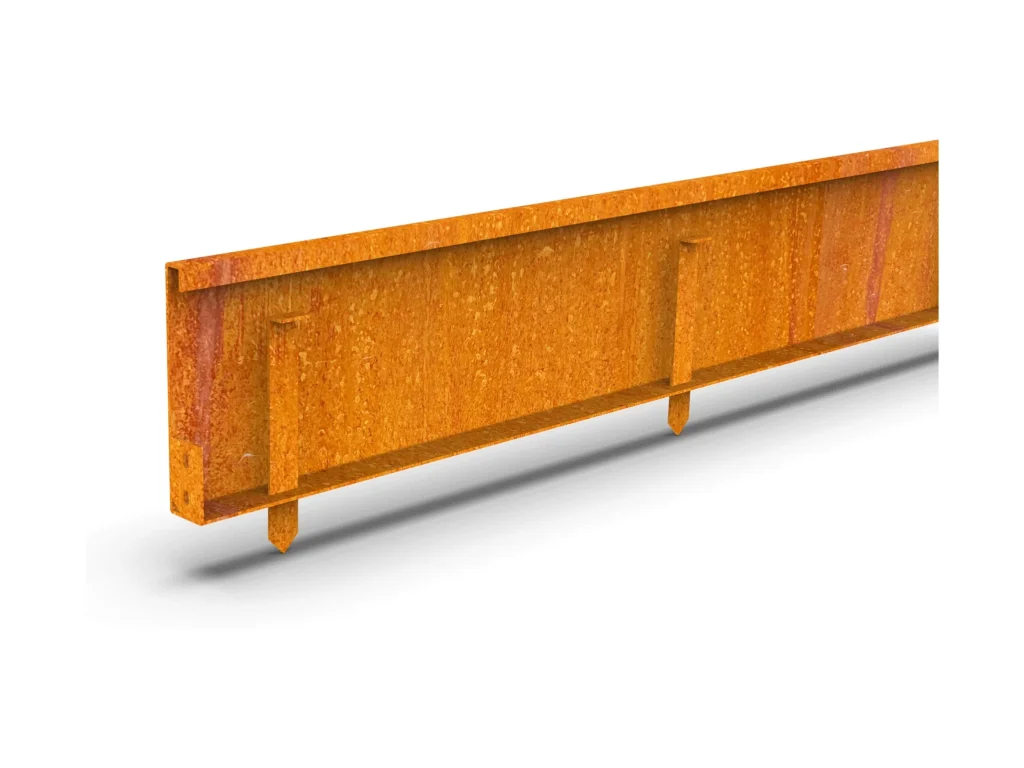
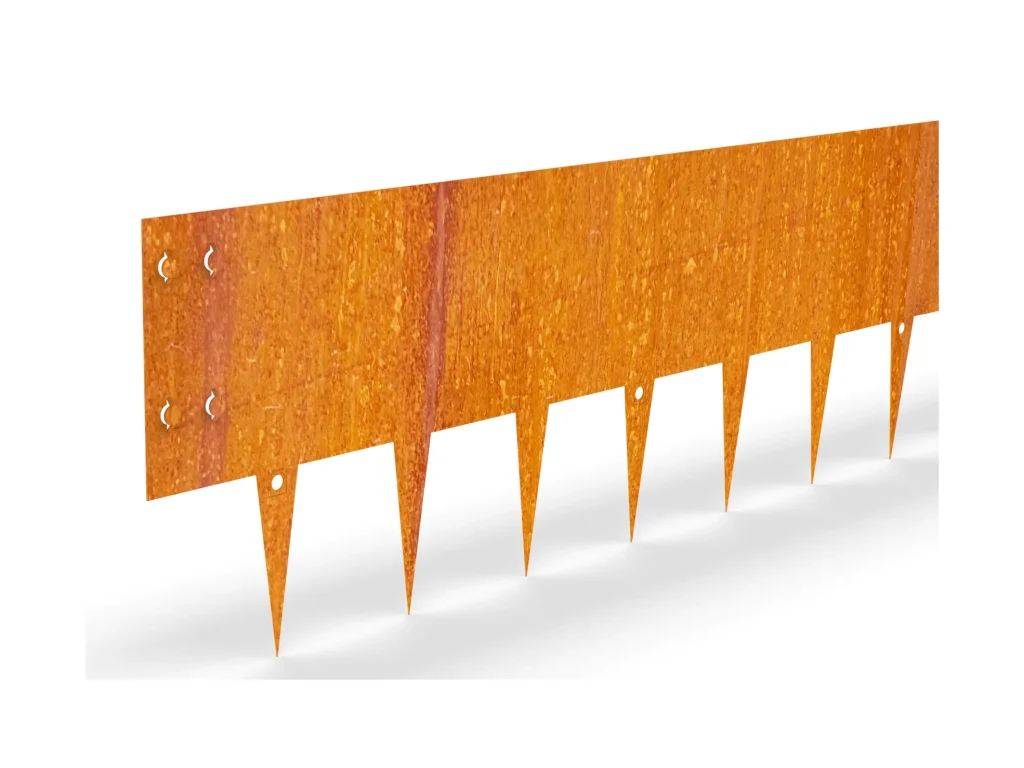
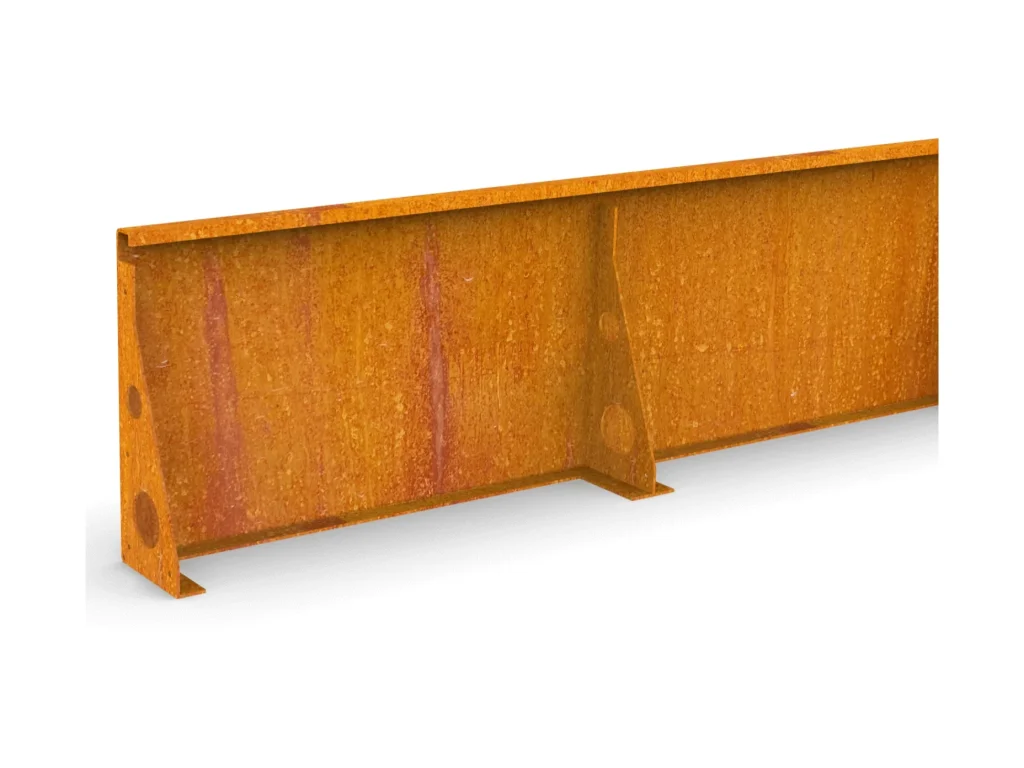
The Corten steel path separation edging disciplines the outline and keeps a straight, tidy line. The 3 mm Corten steel provides stiffness, so the edge does not “wander” and the line stays straight along its whole length.
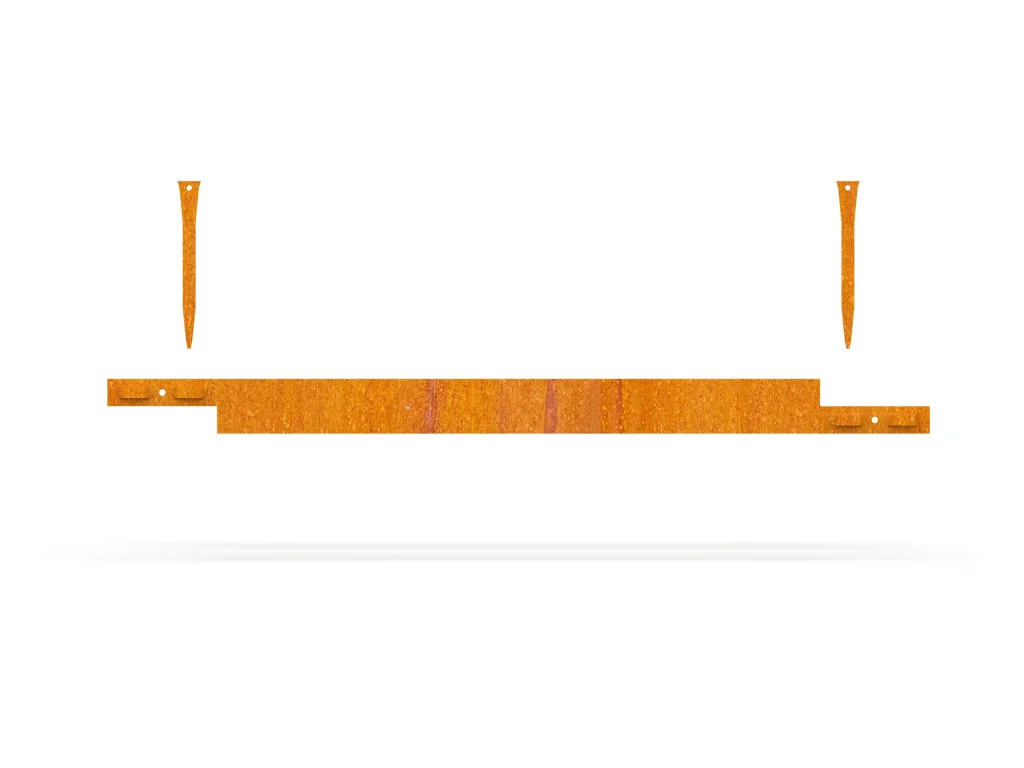
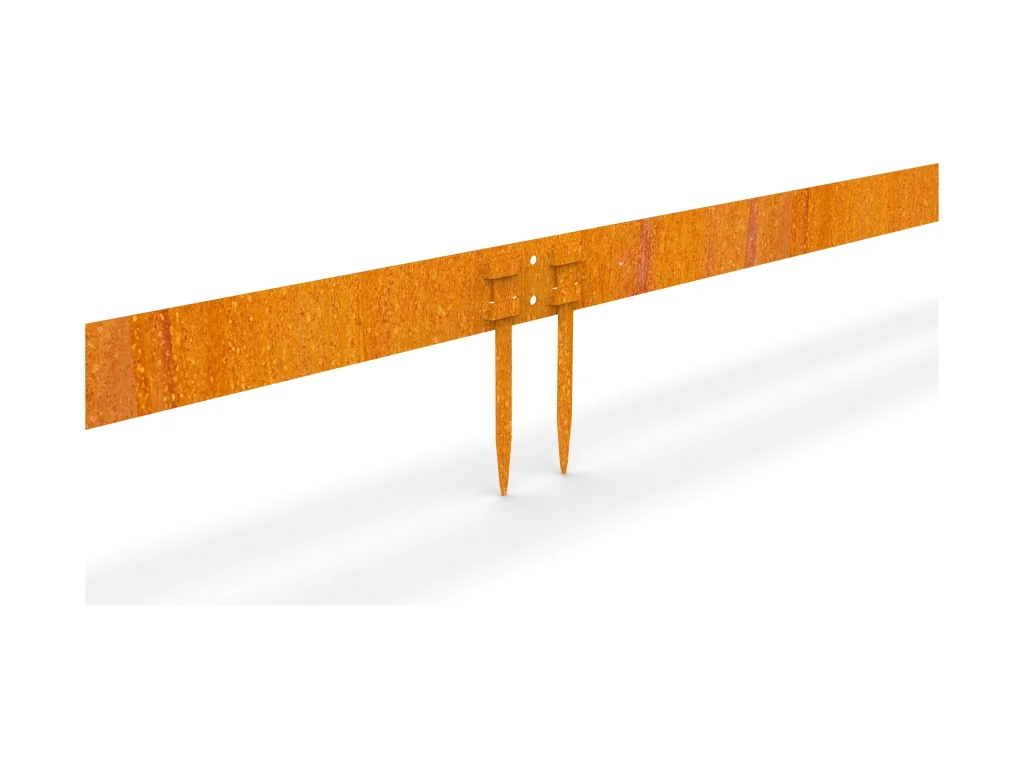
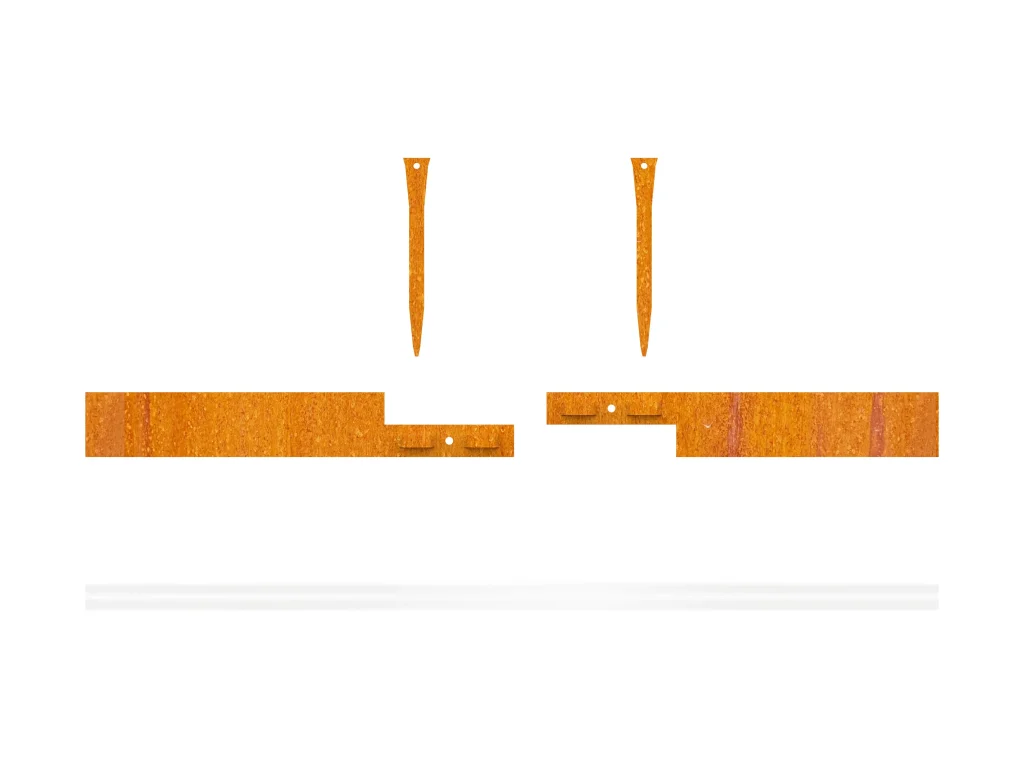
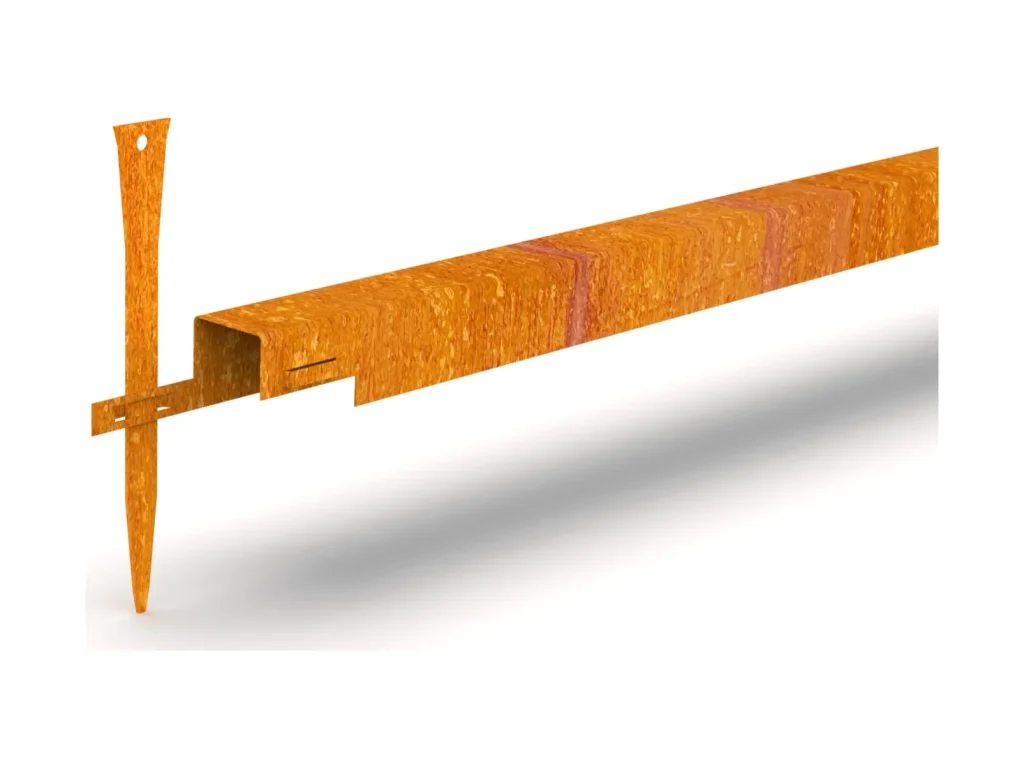
The edgings join by overlap: the lugs on both sides align, a spike is driven through them, and a firm joint forms. Such a joint moves less in use and helps maintain a precisely straight edge.
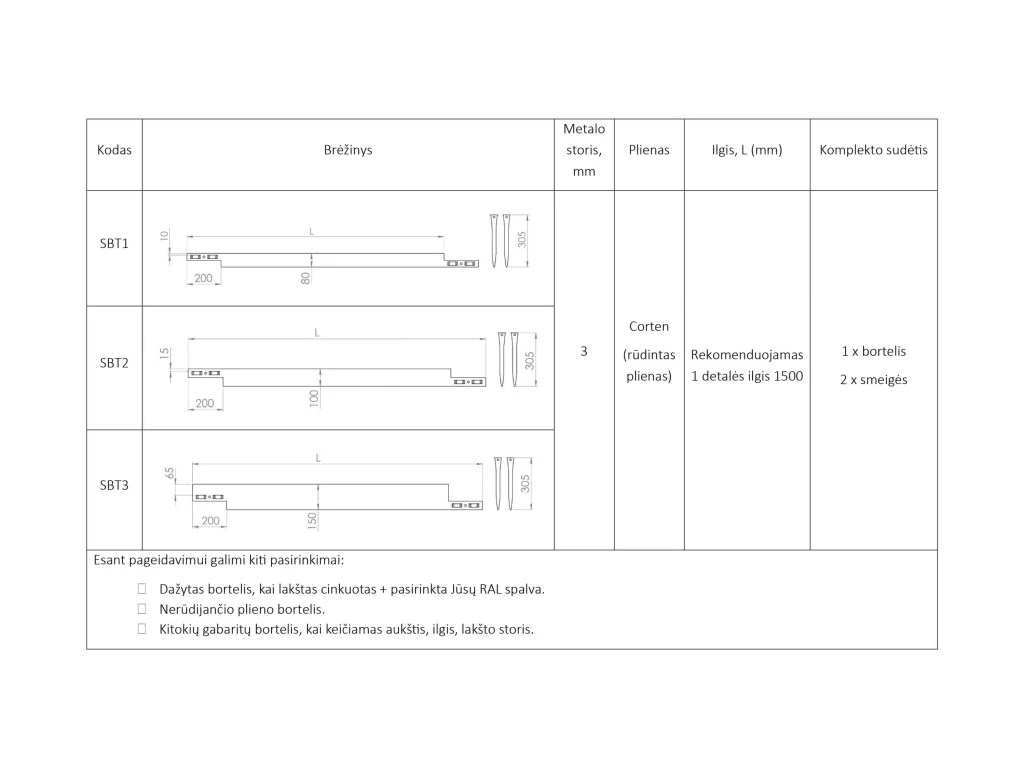
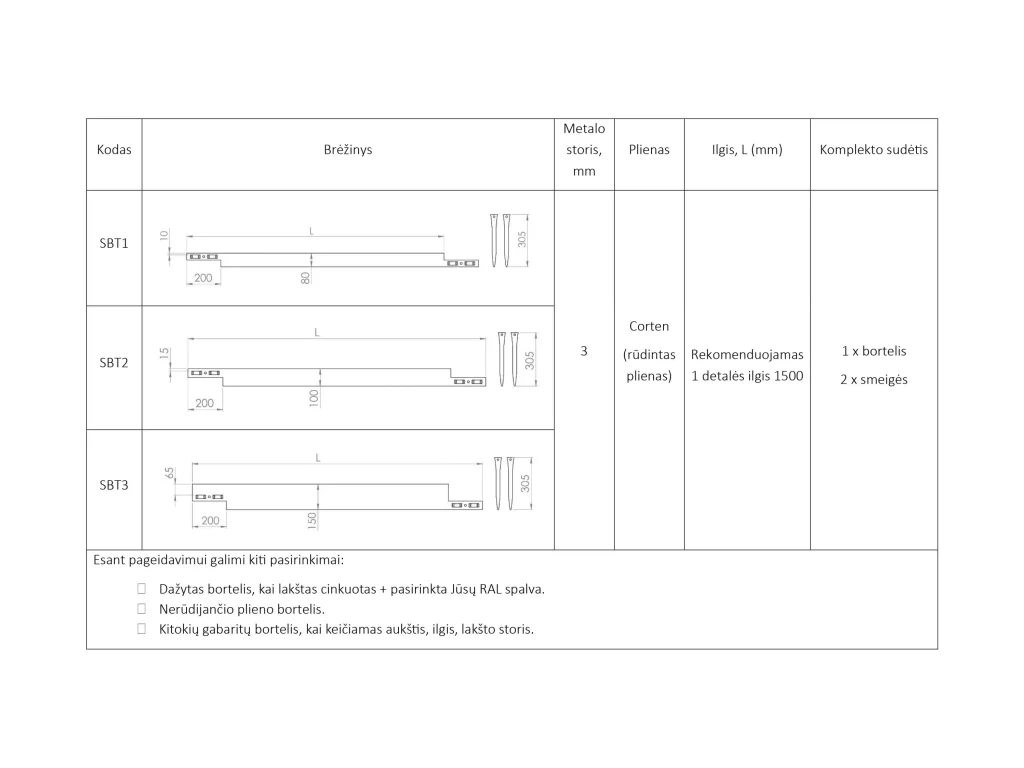
Heights of 80, 100 or 150 mm are available — suitable for paths (gravel, crushed stone, pavers) as well as flower beds and terrace perimeters. The standard single-piece length is 1500 mm; on request we can produce a 3000 mm edging. The construction is flexible enough for gentle curves, though very small radii are not recommended.
Over time, Corten steel develops a natural patina. No painting is needed, and the look takes on a warm, natural character.
Features and benefits
- 3 mm stiffness — the edge holds its shape and “guides” the path precisely.
- Overlapping joint (lugs + spike) — stable and tidy.
- Standard length 1500 mm; for fewer joints, lengths up to 3000 mm are available.
- Three heights — 80 / 100 / 150 mm for different surfaces and layers.
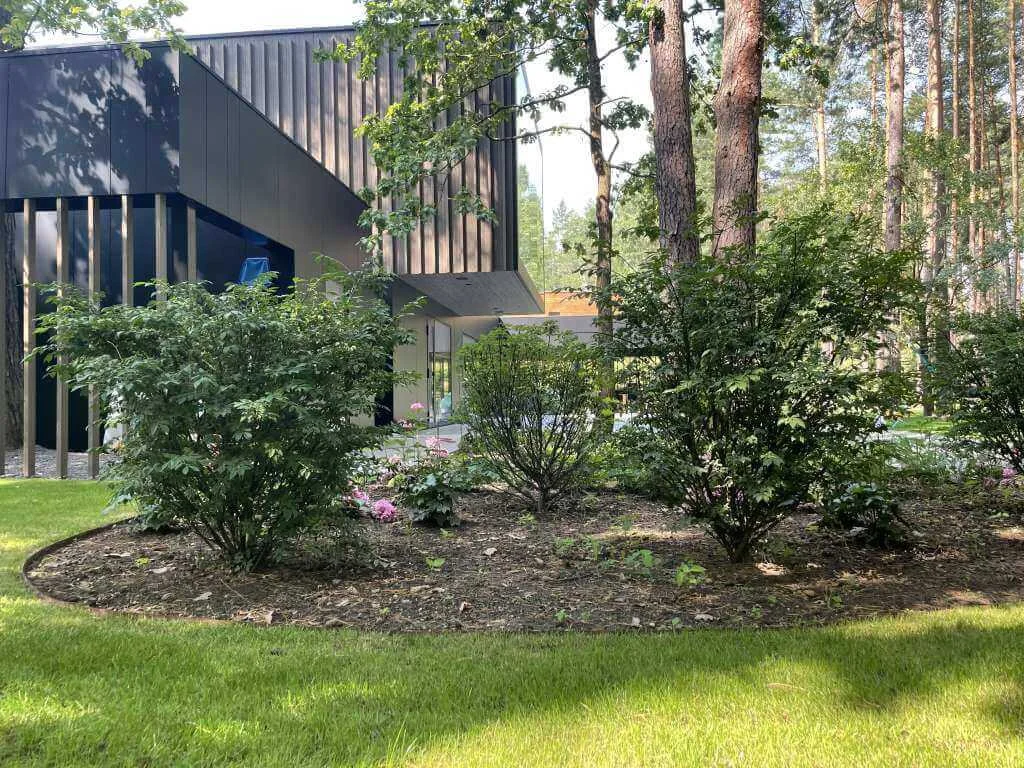
- Forms gentle radii — perfect for winding paths.
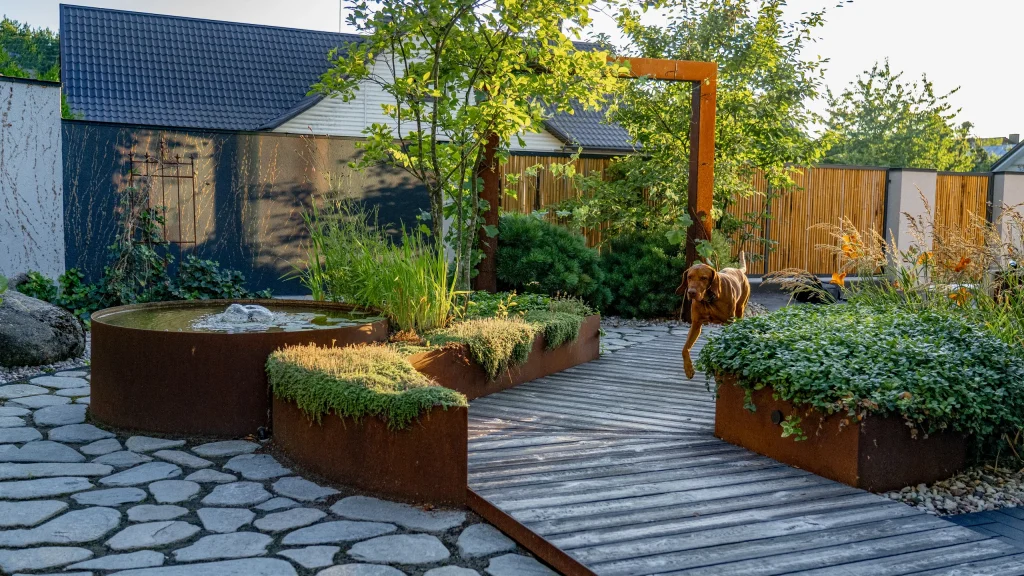
- Corten aesthetics — the patina lends a warm, natural character.
- Universal use — paths, flower beds, terraces.
Installation
1. Mark the line. Use string or a hose; prepare the base (level and compact it).
2. Place the first edging. Set the required height — the top of the edging must align with the level of the planned surface.
3. Join the edgings. Place the next edging with an overlap, align the lugs and drive a spike through — lock the joint.
4. Shape the outline. Continue in a straight line or gentle curves; avoid very small radii.
5. Backfill and compact. Fill with ground or a surfacing layer on both sides of the edging, check evenness and compact.
Frequently asked questions
Can curves be formed?
Yes — the construction is flexible enough for gentle curves. Because of the 3 mm thickness, very small radii are not recommended.
How does the joint work?
The edgings join by overlap: the lugs on both sides align and a spike is driven through. The result is a firm joint with little “wandering”.
What length should I choose?
Choose per project. If you want fewer joints and faster installation, pick longer edgings.
Is it suitable for driveways?
Yes — the 3 mm Corten version suits car driveways if the base is built to the surfacing requirements. The edging is not a vehicle barrier — it shapes and holds the edge.
How are straight 90° corners made?
Form corners from two sections; use an overlap and spike at the joint. If an extra-precise corner is needed, we can prepare a corner element.
Are the spikes supplied?
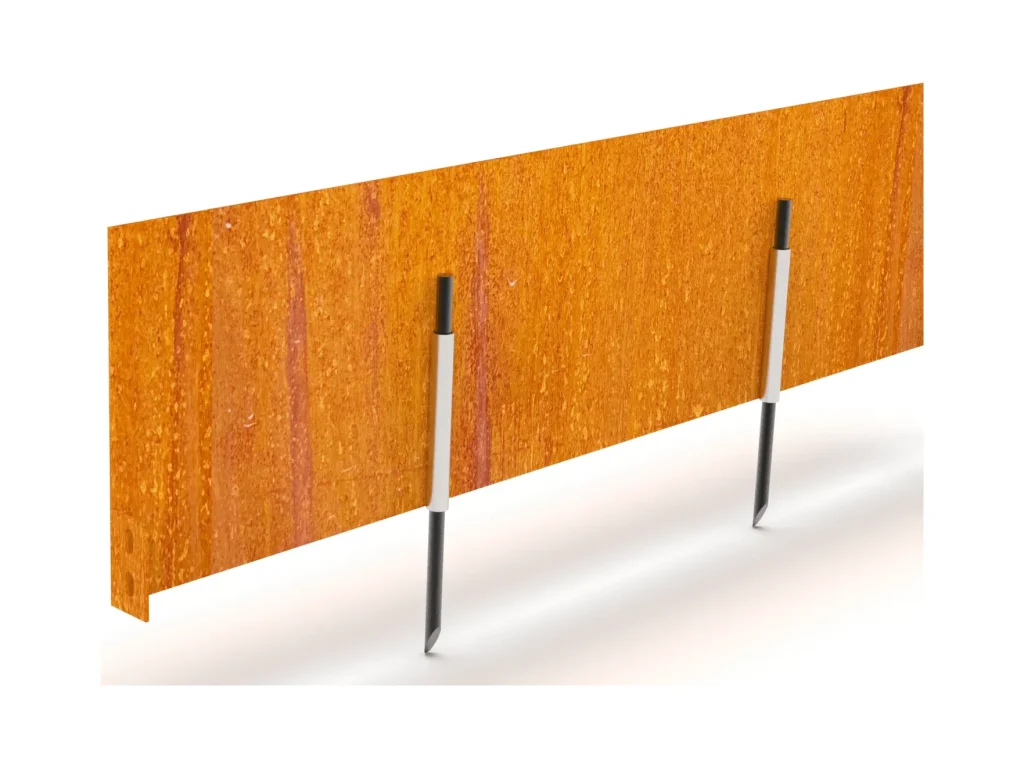
Yes, spikes are supplied — one edging comes with 2 spikes.
Can it be cut and shortened on site?
Yes. Cut with an angle grinder.